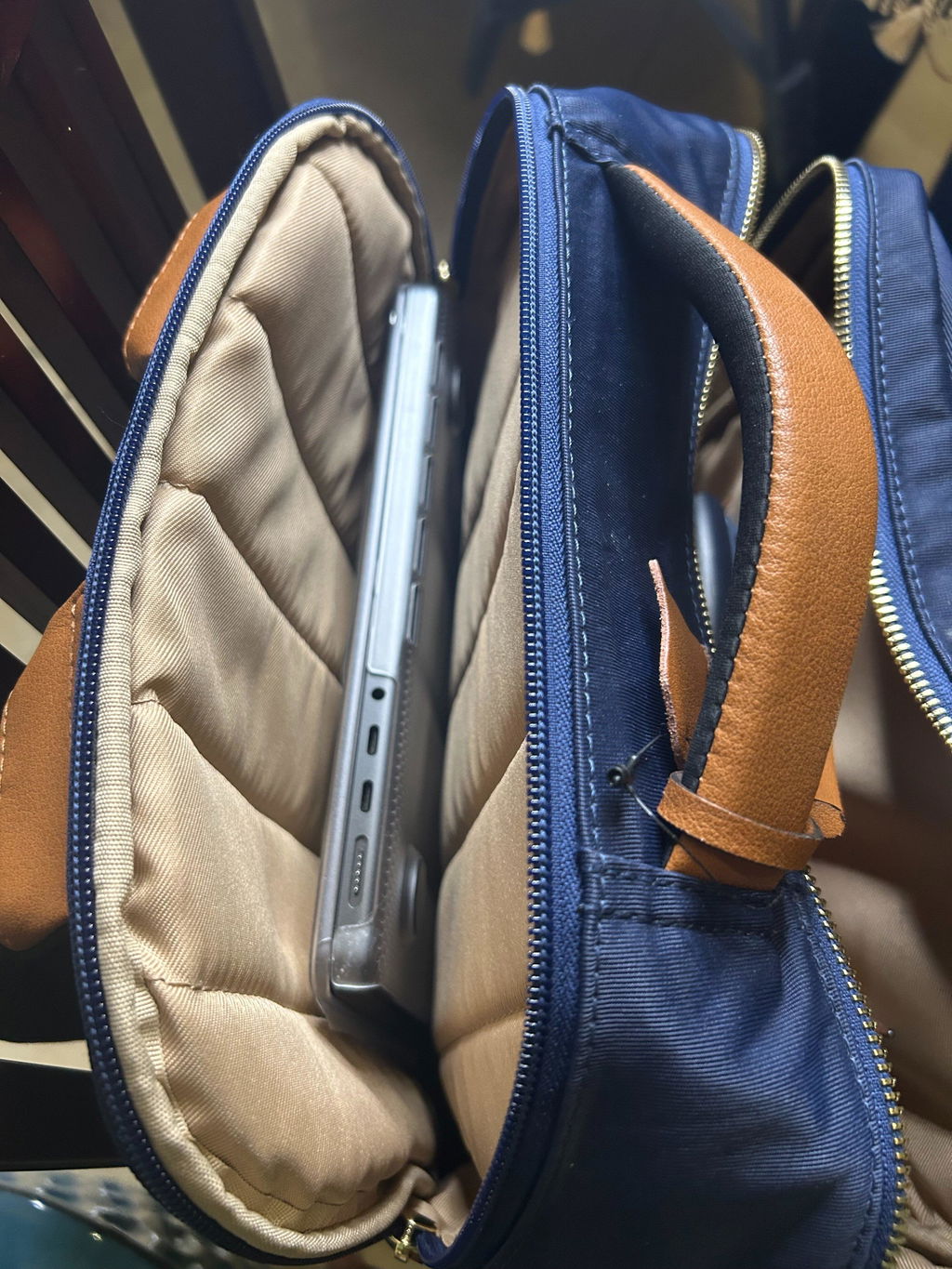
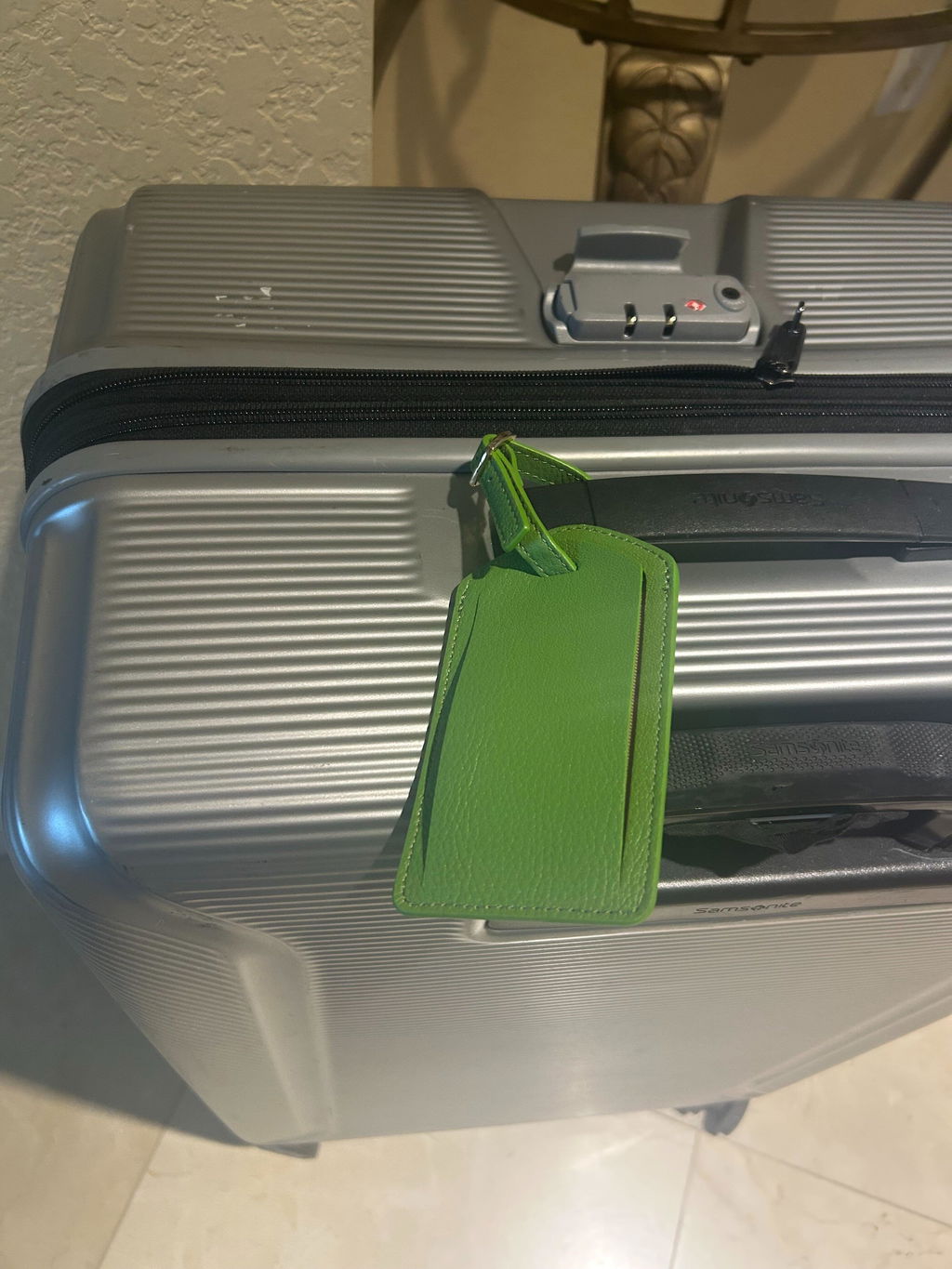
When shopping for a leather bag, wallet, or travel accessory, you'll often see terms such as full-grain leather, top-grain leather, genuine leather, split leather, bonded leather and vegan leather. These terms are not interchangeable, and understanding the differences can help you make a more informed purchase.
Full-grain leather is valued for its durability, natural appearance, and ability to develop character over time. At Miami Leathers, decades of leather-goods manufacturing experience have taught us that choosing the right leather is about more than appearance—the material needs to suit how the finished product will actually be used.
This guide explains what full-grain leather is, how it differs from other types of leather, and why it is such a popular choice for quality bags and accessories.

What Is Full-Grain Leather?
Full-grain leather comes from the outer portion of the hide and retains its natural grain surface rather than having that surface heavily sanded or corrected to create a more uniform appearance.
Because the natural grain remains, you may see subtle variations in texture, grain pattern, color, or small natural markings.
These aren't necessarily defects. They are part of the natural character of genuine leather and help make each piece slightly different.
What Makes Full-Grain Leather Different?
1. Natural Grain
One of the defining characteristics of full-grain leather is its natural surface.
Instead of removing the grain to create an artificially uniform texture, much of the hide's original character remains visible.
This can result in subtle variations from one piece to another—something many leather enthusiasts appreciate.
2. Durability
The outer grain layer contains densely packed fibers that contribute to the leather's strength and durability.
That's one reason full-grain leather is commonly used for products designed for frequent use, including:
- Backpacks
- Messenger bags
- Briefcases
- Travel bags
- Wallets
- Passport holders
- Luggage accessories
Quality construction still matters, of course. Leather alone doesn't determine how durable a finished product will be. Stitching, hardware, lining, edge finishing, and overall construction are also important.
3. Character That Develops With Use
Full-grain leather doesn't necessarily look exactly the same throughout its life.
With handling and use, the surface may gradually develop changes in tone, softness, sheen, and texture. This natural aging process is commonly referred to as patina.
For many people, this is one of the most appealing qualities of full-grain leather.
Rather than needing to remain perfectly unchanged, a well-used leather bag can develop a character that reflects how it has been carried and used.

Why MiamiLeathers Focuses on Full-Grain Leather
Our preference for full-grain leather comes from more than the appearance of the material—it comes from our manufacturing background.
For more than 35 years, our manufacturing operation has specialized primarily in genuine leather goods, with a strong focus on full-grain leather products. The factory's production setup, equipment, material handling, construction methods, and craftsmanship have been developed around working with natural leather.
Manufacturing full-grain leather goods requires understanding how natural hides behave. Unlike highly uniform manufactured materials, leather can vary in grain, thickness, texture, color, and character. Skilled production involves selecting and cutting the leather appropriately, matching pieces, reinforcing stress points, finishing edges, assembling components, and working with the natural characteristics of each hide.
Natural Leather and Synthetic Leather Require Different Manufacturing Expertise
Although products made from full-grain leather, PU, or other vegan leather alternatives may look similar in a photograph, manufacturing them is not necessarily the same process.
Synthetic leather materials can have different characteristics in areas such as:
- Cutting and material handling
- Adhesives and bonding
- Edge finishing
- Stitching and reinforcement
- Machinery and production techniques
- Quality-control standards
Factories often develop their equipment, workflows, sourcing relationships, and employee expertise around the materials and product categories they manufacture most frequently.
Our manufacturing operation has been built around natural leather goods rather than PU or vegan-leather production. Our manufacturing operation does not produce PU or vegan-leather bags and accessories. Instead, we focus on the materials and manufacturing processes in which we have developed decades of expertise.
Instead, we focus on what we know best: creating products from quality natural leather and applying decades of manufacturing experience to the material.
What Is Patina?
Patina is the gradual change in the appearance of leather caused by normal use, handling, light exposure, and aging.
Depending on the particular leather and finish, you may notice:
- Richer color
- Increased softness
- Subtle variations in tone
- A smoother or slightly more polished surface
- Natural marks from everyday use
Patina shouldn't be confused with neglect or serious damage. Proper care is still important.
The goal isn't to keep full-grain leather looking brand-new forever. It's to help it age well.

Full-Grain Leather vs. Top-Grain Leather
These terms are sometimes confused.
Full-grain leather retains the natural grain surface with minimal correction. Because the dense outer grain remains intact, it is valued for durability, natural character, and its ability to develop a distinctive patina over time.
Top-grain leather also comes from the upper portion of the hide, but its surface may be sanded, buffed, or otherwise corrected to create a smoother and more uniform appearance.
Both can be quality materials. Full-grain leather is often preferred when natural character and aging are priorities, while top-grain leather can be a good choice when a smoother, more consistent finish is desired.
What Is Split Leather?
When a hide is processed, it can be separated into layers. The upper layer contains the natural grain and is used to produce full-grain or top-grain leather. The lower layer is called split leather.
Split leather is still genuine, real leather, but it does not contain the dense natural grain surface found in full-grain leather. It can be finished, coated, embossed, or given a textured surface depending on the intended product.
Because it comes from a different layer of the hide, split leather generally does not have the same strength, natural grain character, or aging qualities as full-grain leather. However, it can still be a practical material when selected appropriately for the product.
At Miami Leathers, most of our leather-focused collections use full-grain leather, while a small number of products use split leather when it makes sense for the design, weight, feel, and price of the finished product. We clearly identify the leather material in our product descriptions so customers know what they are purchasing.
Full-Grain Leather vs. Genuine Leather
The term “genuine leather” simply indicates that a material is made from real animal hide. It does not tell you which layer of the hide was used or establish a particular quality grade.
For example, both full-grain leather and split leather are real leather, but their structure and characteristics are different.
That's why we recommend looking beyond the words genuine leather and checking whether a product specifically identifies the material as full-grain, top-grain, split leather, or another leather type.
What Is Bonded Leather?
Bonded leather is very different from full-grain, top-grain, and split leather.
Rather than being a continuous layer of hide, bonded leather is made using leather fibers or scraps that are processed and combined with binding materials, then formed into a sheet. The surface may be coated or embossed to create a more uniform leather-like appearance.
The percentage of actual leather content and the manufacturing process can vary between bonded-leather products.
Bonded leather is generally less expensive than full-grain or top-grain leather, but it also behaves differently over time. Depending on its construction and use, the surface coating may eventually wear, crack, or peel rather than developing the natural patina associated with full-grain leather.
Full-Grain Leather vs. Bonded Leather
The most important difference is how the materials are constructed.
Full-grain leather is made from a continuous portion of natural hide with the grain surface retained. Its natural fiber structure contributes to its durability, texture, and ability to develop character with use.
Bonded leather is manufactured from processed leather fibers or scraps combined with binding materials and formed into a new material.
For customers looking for the natural character, durability, and aging qualities traditionally associated with leather, full-grain leather is generally the stronger choice.
However, bonded leather can provide a leather-like appearance at a lower price and may be suitable for applications where long-term aging and natural patina are not priorities.
What Is Vegan Leather?
Vegan leather is a term used for materials designed to look and feel like leather without using animal hide.
Unlike full-grain, top-grain, or split leather, vegan leather is not animal leather. The term describes a category of leather alternatives rather than one specific material.
Many products marketed as vegan leather are made from synthetic materials such as:
- PU (polyurethane)
- PVC (polyvinyl chloride)
- Microfiber-based synthetic materials
There are also newer leather alternatives incorporating plant-derived materials such as cactus, apple waste, pineapple fibers, mushrooms, or other agricultural sources. However, shoppers should read material descriptions carefully because some products marketed using plant-based terminology may still contain synthetic polymers or coatings.
Vegan Leather vs. Full-Grain Leather
The two materials are fundamentally different.
Full-grain leather comes from natural animal hide and retains its grain surface. With proper care, it can soften and develop a distinctive patina as it ages.
Vegan leather contains no animal hide and is manufactured to create a leather-like appearance and feel. Its durability, texture, water resistance, and lifespan can vary significantly depending on the material and manufacturing process.
Some high-quality synthetic materials can be lightweight, soft, easy to maintain, and well suited to particular types of bags. However, they generally do not age in the same way as natural full-grain leather.
Rather than developing leather's natural patina, some synthetic surfaces may eventually show wear through cracking, peeling, abrasion, or changes to their surface coating.
Is Vegan Leather the Same as PU Leather?
Not necessarily.
PU leather is one type of vegan leather, but vegan leather is a broader marketing term that can describe many non-animal leather alternatives.
For example:
Vegan leather → broad category
PU leather → polyurethane-based synthetic leather
PVC leather → vinyl-based synthetic leather
Microfiber leather → microfiber-based synthetic material
Plant-based alternatives → materials incorporating plant-derived components, sometimes combined with synthetic binders or coatings
Because the term vegan leather alone doesn't tell you exactly what a product is made from, we recommend checking the actual material composition whenever possible.
Is Vegan Leather More Environmentally Friendly?
Not automatically.
The word “vegan” describes the absence of animal-derived leather; it doesn't by itself establish that a material is environmentally preferable.
Environmental impact depends on many factors, including the raw materials, manufacturing process, synthetic content, durability, expected lifespan, and what happens to the product at the end of its useful life.
For that reason, it's better to evaluate the actual material rather than assume that everything labeled vegan leather has the same environmental characteristics.
Full-Grain, Top-Grain, Split, Bonded & Vegan Leather Compared
| Material |
What It Is |
Natural Grain |
How It Typically Ages |
| Full-Grain Leather |
Natural hide with grain retained |
Yes |
Develops natural character and patina |
| Top-Grain Leather |
Upper hide with surface correction |
Corrected |
Generally maintains a more uniform appearance |
| Split Leather |
Lower layer of natural hide |
No original grain surface |
Depends heavily on finish and construction |
| Bonded Leather |
Leather fibers/scraps combined with binders |
No |
Surface may wear or deteriorate with use |
| Vegan Leather |
Broad category of non-animal leather alternatives |
No |
Varies considerably by material |
| PU Leather |
Polyurethane-based synthetic material |
No |
May eventually wear, crack, or peel |
| Microfiber Leather |
Engineered microfiber-based alternative |
No |
Quality and durability vary by construction |

Different Materials for Different Purposes
That doesn't mean we believe every bag should be made from leather.
For certain products, other materials make more sense.
Our Maxwell Collection, for example, combines rugged waxed canvas with full-grain leather trim to create lighter work and travel bags while retaining leather at important structural and design points.
For some lightweight totes and travel products, we use nylon because its low weight, flexibility, water resistance, and easy maintenance make it particularly practical for those applications.
We also use split leather selectively in a small number of products when its characteristics are appropriate for the design and intended price point.
The principle is simple:
Use the right material for the product—and tell the customer clearly what they're buying.
Material Transparency Matters
Terms such as full-grain, top-grain, split, genuine, bonded, and vegan leather tell you something about a material, but they shouldn't be considered in isolation. Look at the entire product—its materials, construction, hardware, stitching, functionality, and whether the design fits the way you intend to use it.
We believe customers deserve more specific information.
That's why we try to identify the actual materials used in MiamiLeathers products rather than relying on broad marketing terminology.
Our goal isn't to convince everyone that one material is appropriate for every situation. It's to help customers understand the differences and choose a product that fits how they plan to use it.
Are Natural Marks Normal?
Yes.
Small variations in grain, texture, and color are normal characteristics of natural leather.
Depending on the hide and finishing process, you may occasionally see subtle wrinkles, grain variations, or other natural characteristics.
This is one reason two full-grain leather bags may not look completely identical even when they are the same style and color.
For customers accustomed to highly uniform synthetic materials, this variation can initially be surprising. For leather enthusiasts, it's often part of the appeal.
How to Care for Full-Grain Leather
Full-grain leather doesn't require complicated maintenance, but a few good habits can help preserve it.
Keep It Clean
Remove dust and surface dirt periodically with a clean, soft cloth.
For more thorough cleaning, use a product specifically intended for the particular type of leather and always test it on a small, inconspicuous area first.
Avoid Excessive Water
A few drops of water aren't necessarily a disaster, but leather shouldn't be soaked.
If your bag becomes wet, gently blot away excess moisture and allow it to dry naturally at room temperature.
Avoid hair dryers, heaters, and other direct heat sources.
Condition When Needed
Leather conditioner can help keep certain leathers supple, but more isn't necessarily better.
Use a conditioner appropriate for the leather and follow the product directions. Always test first because conditioners can sometimes darken leather.
Store It Properly
When you're not using your leather bag:
- Store it somewhere cool and dry.
- Keep it away from prolonged direct sunlight.
- Use a breathable dust bag rather than sealed plastic.
- Lightly stuff larger bags with clean tissue or soft material to help maintain their shape.
- Avoid placing heavy objects on top.
For detailed maintenance instructions, visit our Full-Grain Leather Care Guide.
Is Full-Grain Leather Worth It?
For customers who appreciate natural materials, durability, and a product that develops character with use, full-grain leather can be an excellent choice.
It generally costs more than many synthetic alternatives because you're buying a natural material and, in a well-made product, the craftsmanship required to turn that material into something designed for years of use.
But the leather itself is only part of the equation.
A quality bag also depends on good design, reliable hardware, strong stitching, appropriate lining, and thoughtful construction.
After more than 35 years of leather-goods manufacturing experience, that's something we consider especially important at Miami Leathers: good materials should be matched with good construction and practical design.
Frequently Asked Questions
Is full-grain leather real leather?
Yes. Full-grain leather is real leather that retains its natural grain surface rather than having the surface heavily corrected.
Does full-grain leather scratch?
It can. Some full-grain leathers—particularly pull-up and Crazy Horse styles—show marks more readily than heavily coated leather. Depending on the leather, some light marks may blend into the developing patina with handling and use.
Does full-grain leather soften over time?
Many full-grain leathers become more supple with regular use, although the amount of change depends on the leather, thickness, tanning process, and finish.
Is full-grain leather waterproof?
No. Natural leather should not be considered waterproof unless a particular finished product has been specifically designed and tested as such.
How long does full-grain leather last?
There is no universal lifespan. Leather quality, product construction, frequency of use, environment, and maintenance all matter. A well-constructed full-grain leather product that is properly cared for can provide many years of service.
Why doesn't every piece of full-grain leather look identical?
Leather is a natural material. Grain patterns, texture, and subtle color variations can differ from hide to hide and even across different areas of the same hide.
Understanding What You're Buying
One of the best reasons to learn about leather is simply to become a better-informed shopper.
Terms such as full-grain, top-grain, and genuine leather tell you something about the material, but they shouldn't be considered in isolation. Look at the entire product—its construction, hardware, stitching, functionality, and whether the design fits the way you intend to use it.
At MiamiLeathers, we believe customers should understand the materials they're buying. After decades of manufacturing leather goods, we've created our own collections around a simple principle:
Use the right material for the product—and tell the customer clearly what they're buying.
Quality materials. Practical construction. Honest value.
Continue Learning:
Full-Grain Leather: Why It's Worth the Investment
Comparing Full-Grain Leather to Other Types of Leather
Full-Grain Leather Care Guide