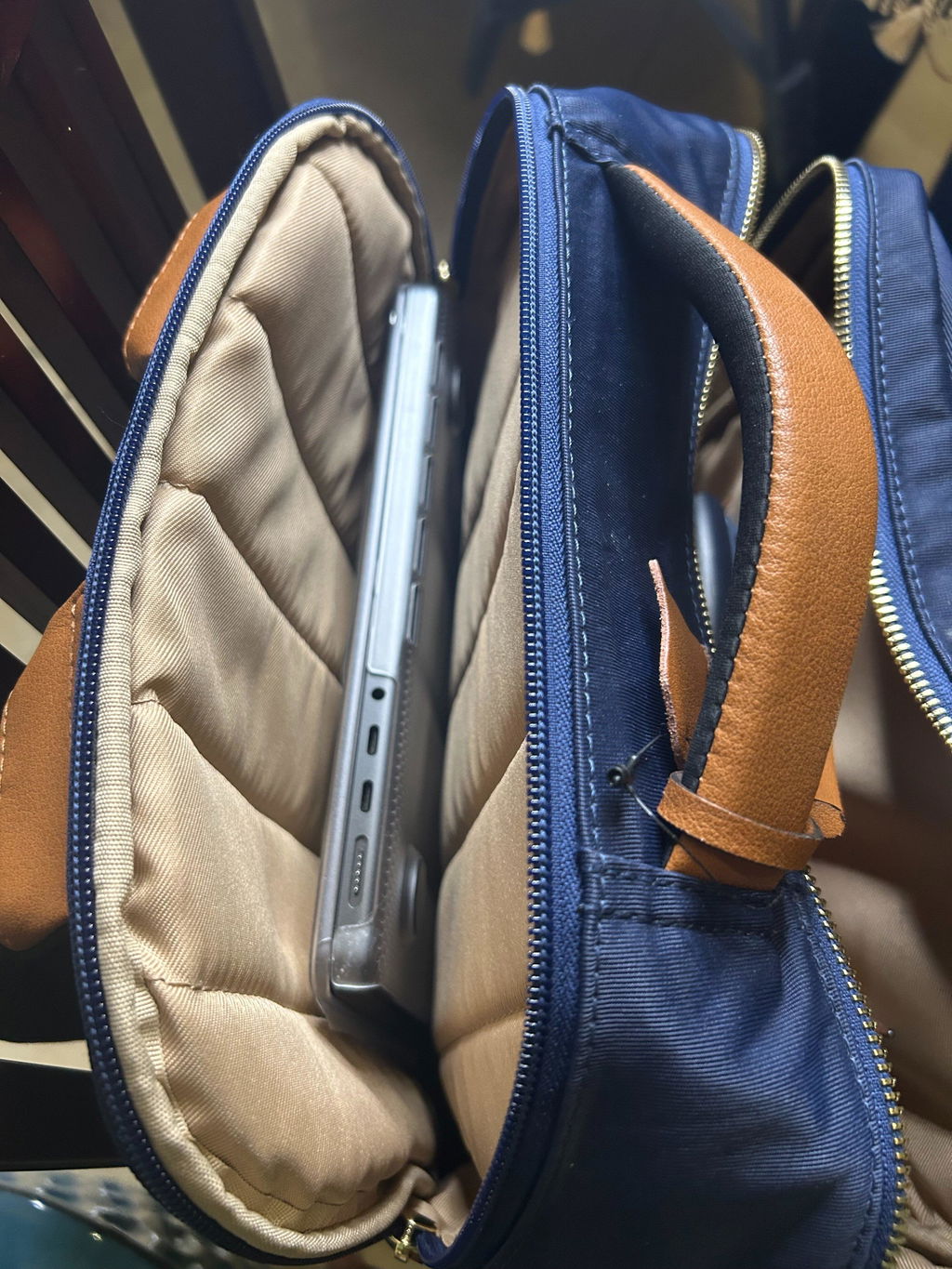
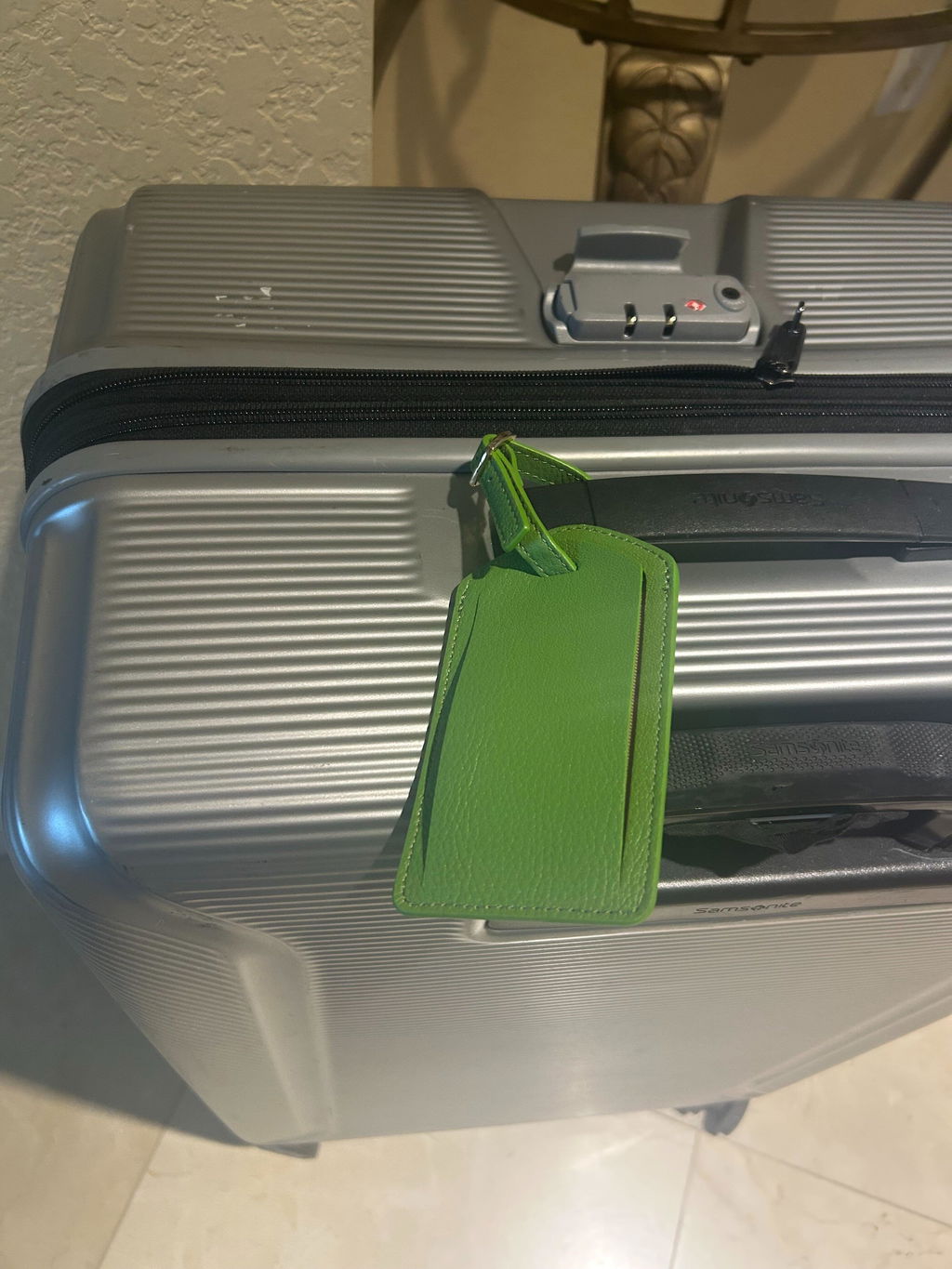
When shopping for a leather bag, wallet, or travel accessory, you may see many descriptions: full-grain leather, top-grain leather, genuine leather, split leather, bonded leather, PU leather, vegan leather, and more.
Unfortunately, appearance alone doesn't always tell you exactly what you're buying.
Modern finishing techniques can make lower-cost leather and synthetic materials look surprisingly convincing, while some genuine full-grain leathers can have smooth, uniform finishes that don't match the rugged appearance people commonly associate with natural leather.
So how can you tell whether a product is actually made from full-grain leather?
There isn't one foolproof test. Instead, informed buyers should look at the material description, surface characteristics, construction, seller transparency, and several physical clues together.
First: What Does Full-Grain Leather Actually Mean?
Full-grain leather comes from the outer grain portion of the hide and retains the natural grain surface rather than having that surface heavily sanded or corrected.
Because the natural grain remains, full-grain leather is valued for its strength, texture, character, and ability to develop changes in appearance with use.
However, full-grain leather does not have one single appearance.
It can be:
- Smooth
- Pebbled
- Matte
- Glossy
- Soft
- Firm
- Rugged
- Refined
- Oiled or waxed
- Lightly or more heavily finished
That's why identifying it requires more than looking for one particular texture.
1. Start With the Material Description
This is one of the most useful steps—and one buyers sometimes overlook.
Look for a seller who tells you specifically what the product is made from.
Descriptions such as:
“Full-grain cowhide leather”
“Full-grain buffalo leather”
“Full-grain Crazy Horse leather”
provide considerably more information than simply:
“Leather”
or
“Genuine leather.”
“Genuine leather” generally tells you that real leather is present, but it does not identify a precise leather grade.
A trustworthy product page should make the material reasonably clear rather than forcing customers to guess.

2. Look for Natural Variation — But Don't Depend on It
Full-grain leather often retains characteristics of the original hide.
Depending on the leather and finish, you may notice:
- Grain variation
- Wrinkles
- Subtle color differences
- Natural texture
- Small markings
- Differences between two pieces made from the same leather
These variations can be signs of natural leather.
But there is an important qualification:
A perfectly uniform-looking surface does not automatically mean the leather is fake, and visible imperfections do not automatically prove that it is full-grain.
Leather can be finished in many different ways, and manufacturers can emboss grain patterns onto other materials.
Natural variation should therefore be treated as one clue, not proof by itself.
3. Look Closely at the Surface
Natural leather grain usually has more complexity than an artificial repeating pattern.
When viewed closely, genuine leather may show subtle changes in pore structure, grain size, wrinkles, and texture rather than an identical pattern repeating across the entire surface.
Synthetic materials and embossed leather can sometimes show a more regular pattern.
However, manufacturing technology has become sophisticated enough that visual inspection alone isn't always reliable.
This is another reason to combine physical observation with accurate material information from the seller.
4. Examine the Edges — When They're Visible
An unfinished cut edge can sometimes provide useful information.
Natural leather generally reveals a fibrous internal structure rather than the fabric backing or clearly separated synthetic layers that may be visible in some faux-leather materials.
But many quality leather products use:
- Painted edges
- Folded edges
- Turned construction
- Edge coating
- Binding
So you may not be able to see a raw leather edge at all.
A painted or finished edge does not mean the product isn't full-grain leather.
Edge construction is a clue only when the underlying material is actually visible.
5. Feel the Leather
Natural leather often has a tactile quality that is difficult to describe until you've handled different materials.
Depending on the leather, it may feel:
- Supple
- Firm
- Waxy
- Oily
- Dry
- Pebbled
- Smooth
- Dense
Full-grain leather may also respond subtly when bent or handled, revealing changes in texture or color.
For example, some pull-up leathers temporarily lighten where the leather is bent or stretched because oils and waxes move within the hide.
Crazy Horse leather can also develop visible marks and tonal changes through handling.
But again, there is no single “full-grain feel.” Different tanning and finishing processes produce very different surfaces.
6. Don't Rely on the Smell Test
You've probably heard the advice:
“Real leather smells like leather.”
There is some truth behind this, but smell isn't a reliable way to determine leather grade.
Natural leather can have a characteristic scent, but tanning agents, dyes, waxes, oils, finishes, adhesives, lining materials, packaging, and storage can all affect how a finished product smells.
Synthetic materials can also be manufactured with scents intended to resemble leather.
Smell can be an observation, but it should never be your main test.

7. Skip the Water-Drop Test
Another common internet recommendation is to place a drop of water on leather and see whether it absorbs.
We do not recommend using this as a test.
Different full-grain leathers can have very different surface finishes. Oils, waxes, pigments, and protective treatments can cause water to behave differently even on genuine full-grain leather.
More importantly, deliberately applying water can potentially leave a temporary or permanent mark on certain leathers.
How quickly a product absorbs water does not reliably determine whether it is full-grain leather.
There's no reason to risk damaging a product to perform an inconclusive test.
8. Don't Assume Higher Price Automatically Means Better Leather
Full-grain leather generally costs more to produce than many lower-cost materials, so an unusually inexpensive product making premium-leather claims deserves closer examination.
But price alone proves nothing.
A high price can reflect:
- Designer branding
- Retail markup
- Marketing
- Distribution costs
- Country of manufacture
- Hardware and construction
- Labor
- Product design
Likewise, a more moderately priced product isn't automatically lower-quality leather.
The better question is:
Does the seller clearly explain what you're paying for?
9. Look Beyond the Leather
Even genuine full-grain leather cannot compensate for poor product construction.
When evaluating a bag or accessory, also examine:
- Stitching
- Reinforcement
- Zippers
- Hardware
- Strap attachment points
- Lining
- Edge finishing
- Pocket construction
- Overall design
A quality leather product is a combination of material and craftsmanship.
Two bags can both use full-grain leather and still differ substantially in overall quality.
10. Look for Transparency From the Seller
This may be the most important buying tip of all.
A trustworthy seller should be willing to tell customers what materials are used.
Look for specific descriptions rather than vague marketing phrases such as:
“Premium leather”
“Luxury leather”
“Leather-like material”
“High-quality leather”
Those phrases may describe appearance or positioning, but they don't tell you what the material actually is.
More useful information includes:
- Full-grain vs. top-grain vs. split leather
- Cowhide vs. buffalo or another hide
- Leather finish or style when relevant
- Other major materials used in the product
When information isn't clear, ask the seller.
What About “Genuine Leather”?
This deserves special attention because the phrase is frequently misunderstood.
Genuine leather generally means real leather, but it is not by itself a precise grade of leather.
A product described only as “genuine leather” may be made from different types or layers of leather.
That's why we recommend looking beyond the word genuine and asking:
What type of leather is it?
Full-grain?
Top-grain?
Split leather?
Specific information is much more useful than a broad label.
Full-Grain Leather vs. PU or Vegan Leather
PU and many other materials marketed as vegan leather are fundamentally different from natural full-grain leather.
They can sometimes imitate leather very convincingly, particularly in photographs.
That's another reason we don't recommend relying on appearance alone when shopping online.
Check the actual material composition.
If a product is described as PU, polyurethane, faux leather, synthetic leather, or vegan leather, don't assume it is natural full-grain leather unless the manufacturer clearly explains otherwise.
How Miami Leathers Describes Our Materials
At Miami Leathers, we believe customers should know what they're buying.
Our primary leather collections—including Cambridge, Sophia, and Crazy Horse—focus on full-grain leather, and we identify the material on our product pages.
We also sell products made from other materials when those materials make sense for the product, including waxed canvas, nylon, and a limited number of split-leather products.
We don't believe every product needs to be made from full-grain leather.
We do believe the material should be described accurately.
Our approach comes from more than 35 years of leather-goods manufacturing experience. After decades of manufacturing premium leather goods for established brands, we created Miami Leathers to bring that experience and craftsmanship directly to our own customers.
Quick Buyer's Checklist
When evaluating a leather product, ask:
Does the seller specifically say “full-grain leather”?
Do they identify the type of hide or leather when relevant?
Does the surface show believable natural variation rather than relying solely on a marketing description?
Is the material description consistent throughout the product page?
Does the construction appear appropriate for the price?
Does the seller provide enough information for you to understand what you're buying?
Can you contact the seller if the material isn't clear?
If those questions have good answers, you're in a much better position than you would be relying on a water drop, smell, or surface appearance alone.
The Most Reliable Test Is Information
There is no simple home test that can conclusively identify every type of full-grain leather.
Natural variation, edges, texture, feel, and construction can all provide clues—but modern leather finishing and synthetic-material manufacturing make some traditional identification methods unreliable.
For buyers, the best protection is a combination of knowledge and seller transparency.
Learn what the terminology means. Look beyond marketing language. Examine the construction. And buy from companies willing to clearly tell you what their products are made from.
That's a much more reliable approach to finding quality full-grain leather.
Continue Learning
Full-Grain Leather 101: Understanding the Basics
Understand how full-grain leather is made and what distinguishes it from other leather types.
Full-Grain Leather vs. Other Types of Leather
Compare full-grain, top-grain, split, bonded, and synthetic alternatives.
Full-Grain Leather: Why It's Worth the Investment
Understand the relationship between material quality, durability, craftsmanship, and long-term value.
Caring for Your Full-Grain Leather Handbag: Essential Tips
Learn how to clean, condition, protect, and store your leather products properly.